Why slowing down could mean the Fed goes higher
Step-down in pace trades against longer hold
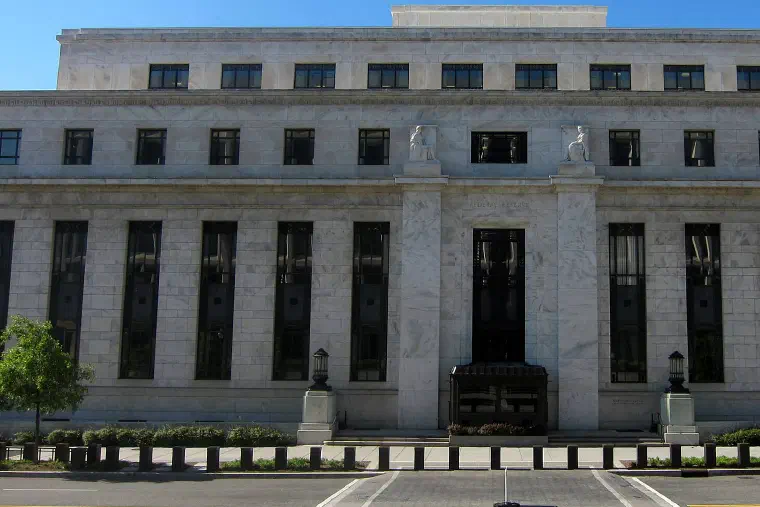
As the Federal Open Market Committee gathers for its November policy deliberations, interest rate futures are pricing a fourth consecutive 75-basis-point increase, bringing the policy rate to 3.75 to 4.00 per cent. Concurrently, an intense debate has emerged across trading desks regarding the timing and choreography of the eventual monetary step-down. The emerging consensus suggests that the central bank will downshift to a 50-basis-point increment in December, an expectation that has prompted a predictable relief rally in risk assets. Yet this market celebration misinterprets the basic arithmetic of monetary policy: slowing the monthly pace of rate increases is not a prelude to an early pause; it is the tactical mechanism that permits the terminal rate to settle higher for longer.
The economic logic of this tradeoff is rooted in risk management. When a central bank moves in violent 75-basis-point increments, it introduces acute financial stability risks into the financial plumbing, threatening to break fragile credit structures before their macroeconomic effects can be evaluated. By downshifting to smaller increments, policymakers buy the operational runway needed to extend the hiking cycle well into 2023, pushing the terminal rate toward 5 per cent without triggering an immediate liquidity accident.

The Pace-Versus-Destination Tradeoff
Federal Reserve officials are acutely conscious of the long and variable lags governing monetary transmission. A committee moving at breakneck speed risks overshooting its objective because the macroeconomic data it observes in the present reflects monetary conditions established twelve to eighteen months prior. Stepping down to 50- or 25-basis-point adjustments allows the committee to probe for the market-clearing terminal rate with greater analytical precision.
However, fixed-income markets routinely conflate a reduction in pace with a reduction in ultimate intent. When traders observe a smaller hike increment, they mechanically pull forward their expectations for an eventual pause and price in rate cuts for the subsequent year. This premature easing of financial conditions—manifested in rising equity valuations, tightening credit spreads, and declining mortgage rates—actively undermines the central bank’s inflation-fighting objective. To counteract this unwanted easing, the central bank must offset a smaller pace of tightening by raising its projection for the ultimate terminal rate.


The Duration Trap
For corporate borrowers, a higher terminal rate held for an extended duration is far more economically damaging than a sharp, transitory spike that quickly unwinds. The corporate sector entered 2022 with substantial cash reserves and well-termed-out debt maturity schedules, insulating most investment-grade balance sheets from the immediate impact of early rate hikes. If the policy rate had peaked at 4 per cent and reversed quickly, the damage to corporate cash flow would have been modest.
If, however, the federal funds rate settles near 5 per cent and remains anchored there through the entirety of 2023, corporate debt refinancings will begin to bite with mathematical certainty. Term loans and revolving credit facilities linked to SOFR will compound interest expenses at rates not experienced in fifteen years, systematically consuming operational free cash flow. Working capital facilities will reprice, inventory holding costs will double, and marginal debt-funded projects will be abandoned across corporate boardrooms.
The debate over step-down increments is therefore an optical distraction. A central bank that slows down its rate hikes is not turning dovish; it is simply pacing itself to ensure it can reach a higher terminal altitude without causing a premature mid-air stalling of the financial system. Investors celebrating the end of 75-basis-point increases will soon discover that a prolonged stay at 5 per cent is vastly more restrictive than the rapid ascent that preceded it.